
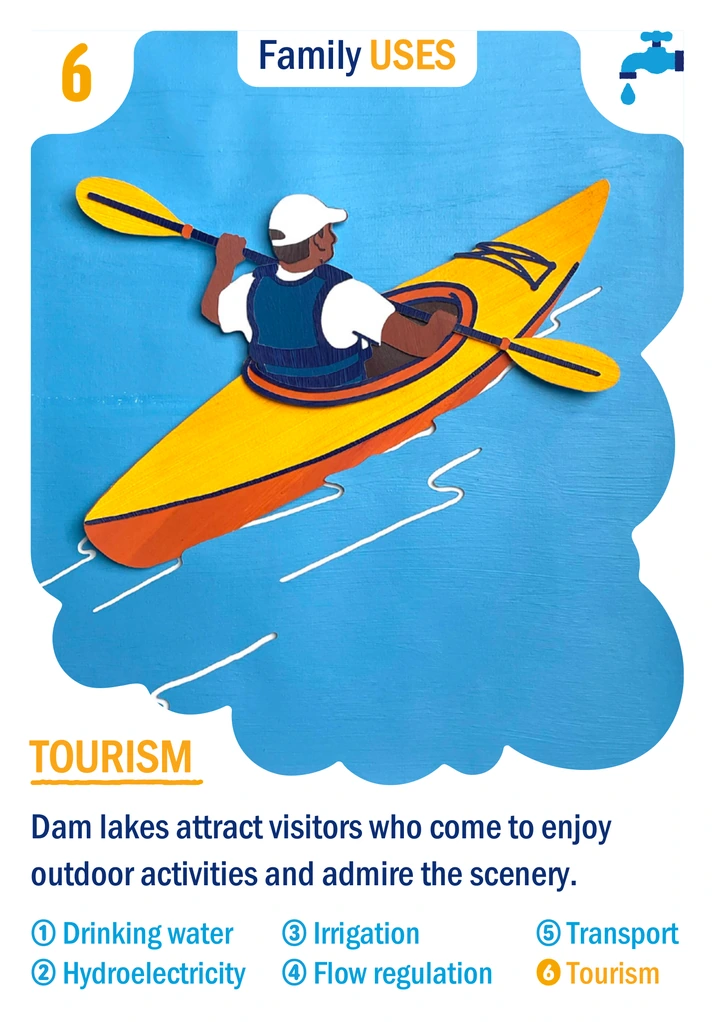
Uses family · card no. 6
Tourism
Dam lakes attract visitors who come to have fun and admire the scenery.
Educational fact sheet
In brief
By holding back water in the hollow of a valley, some dams create a big lake that has become a tourist site: people swim, go boating and walk there.
How does it work?
A calm lake in the middle of mountains or forests allows plenty of activities:
- Water sports: sailing, windsurfing, paddleboarding, canoeing and kayaking, rowing.
- Swimming and relaxing: supervised beaches, campsites and hiking trails around the lake.
- Fishing: pike, perch and trout live there.
- A summer agreement: on some lakes, the company that produces electricity promises to keep enough water from June to September, so that everyone can enjoy the activities.
Key facts
The lakes of Serre-Ponçon and Sainte-Croix (in the Verdon gorges) are very well-known holiday destinations.
Words to know
- Nautical: relating to activities on the water.
- Hiking: a long walk in nature.
Did you know? If the water of some glacier lakes is turquoise, it is thanks to "rock flour": tiny grains of rock, ground by glaciers, float in the water and send back the sunlight.
Going further
The level of a dam lake is not fixed: it can rise or fall by several meters depending on the seasons and uses (storing snowmelt, producing electricity, supporting the river in summer). Depending on the time of year, a beach or a jetty can therefore end up far from the water. To swim or sail safely, always follow the signs posted on site.
In FrenchTourisme