
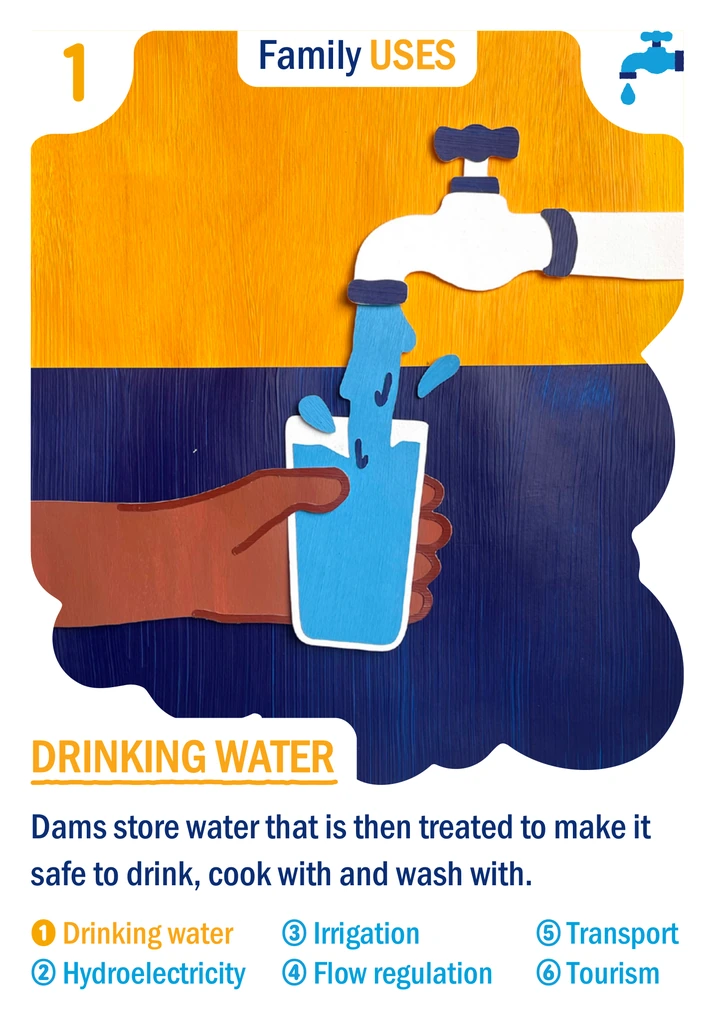
Uses family · card no. 1
Drinking water
Dams store water that is then cleaned so that it is good to drink, to cook with and to wash with.
Educational fact sheet
In brief
When you turn on the tap, where does the water come from? Sometimes from a dam! These big lakes are like giant water towers. They keep water in reserve, even after months without rain.
How does it work?
- Protect the lake. Around it, rules limit the activities that could pollute: the water must stay clean from the start.
- Pick the right water. The intake (the entrance, like a giant straw) can draw water from several depths, to take the coolest and clearest water depending on the season.
- Clean it. In a plant, it is filtered, the dirt is left to settle at the bottom (settling), then it is disinfected. It then travels in pipes to homes.
Key facts
In France, about one third of the water taken to become drinkable comes from surface water (rivers, lakes and dams). The other two thirds or so come from underground water.
Words to know
- Drinkable (potable): good to drink, safe for health.
- Disinfect: to kill germs.
Did you know? In Marseille, tap water comes from the Alps! It travels over more than 100 kilometers in canals, thanks to the Durance-Verdon system (to which the Serre-Ponçon dam contributes a lot), simply flowing downhill.
Going further
Water from a dam lake is never sent straight to the tap. Before it is distributed, it is treated, then checked regularly: we make sure it contains no germs or dangerous substances. That is also why the lake itself is protected: the cleaner the water is at the start, the easier it is to make drinkable.
In FrenchEau potable