
Components family · card no. 6
River
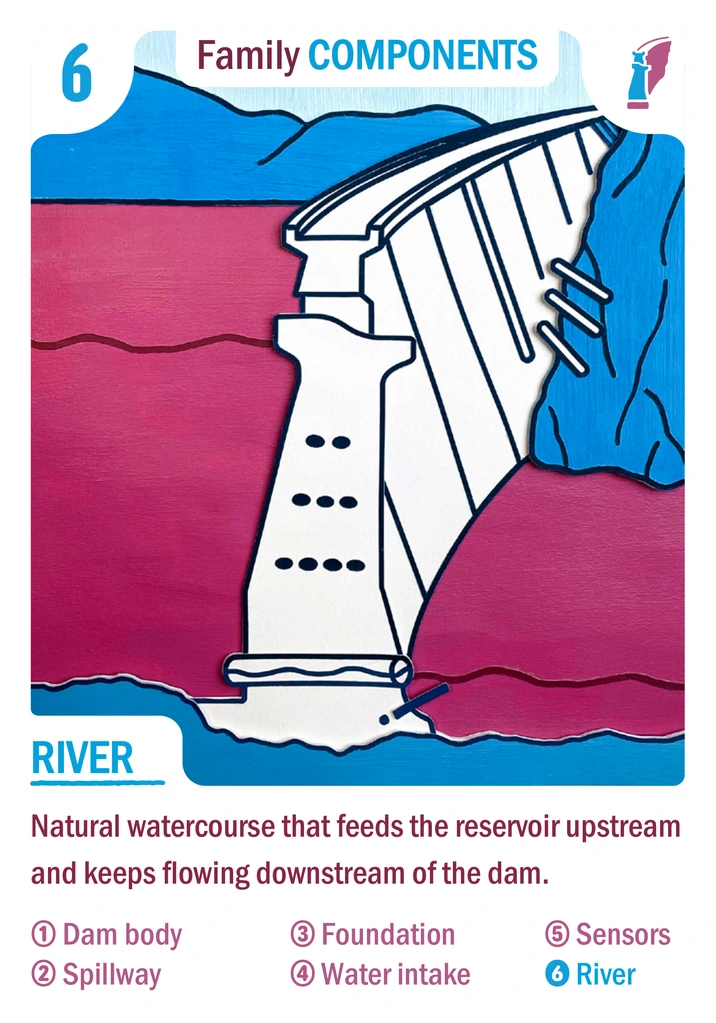
It brings the water to the lake, then goes on its way after the dam: it must be protected, along with those who live in it.
Educational fact sheet
In brief
A dam does not remove the river: it lives with it! The river brings water (and sand) to the lake, then carries on behind the dam. The animals and plants that live there must be protected.
How does it work?
Engineers take care of ecological continuity: the river must remain a place of passage for everything that lives in it. To do this:
- The minimum flow: a minimum amount of water must keep flowing downstream, 365 days a year, for fish, insects and plants.
- Fish passes: water staircases, small artificial streams or even fish elevators let trout, salmon and eels get past the dam.
- The passage of sand: depending on the site, devices or operations are set up to let sand and gravel move down to the downstream side, so that fish find places to lay their eggs.
Key facts
In France, in the general case, the law requires leaving at least one tenth of the river's average flow after the dam (one twentieth in some cases).
Words to know
- Upstream / downstream: upstream = before the dam, lake side; downstream = after it, river side.
- Migratory fish: fish that travel between the sea and rivers (salmon, eel).
Did you know? At the Golfech dam, on the Garonne, a current of water attracts migratory fish into a big cage. It lifts them up like an elevator to the other side of the dam!
Going further
A dam holds back part of the sand and gravel that the river carries: they settle at the bottom of the lake. Downstream, the river may then run short of them, its bed slowly deepens and fish find fewer places to spawn. That is why operations are sometimes organized to let these sediments move on downstream.
In FrenchRivière